Sick leave allowance at your Hungarian company
Sick leave is a form of paid time off in Hungary. When your employees are sick, they are not supposed to come to work so they will not infect their colleagues and customers, and they can recover faster. The number of sick leave days cannot be limited, and you are supposed to pay sick leave allowance throughout, although the form and amount of compensation will change over time. Learn what sick leaves mean for your Hungarian business.
Sick leave is a form of paid time off in Hungary. When your employees are sick, they are not supposed to come to work so they will not infect their colleagues and customers, and they can recover faster. The number of sick leave days cannot be limited, and you are supposed to pay sick leave allowance throughout, although the form and amount of compensation will change over time. Learn what sick leaves mean for your Hungarian business.
What is sick leave?
When we say an employee is sick, we mean they are not fit to work due to a health-related reason. This reason can be anything from infection through medical procedure, flare-up of a chronic disease, or result of an accident. In either case, employees will be declared unfit to work by a doctor, and go on sick leave, receiving temporary exemption from their work. Mostly this will mean that they are supposed to stay at home, rest up, and recover quickly. During this time, the employee still receives compensation, although not their full salary.
Compensation during sick leave
Employees should receive sick leave allowance throughout their sick leave. The sick leave may be up to 1 year long; if someone is incapable to work for longer than that, they should be considered disabled, and receive another type of allowance. There are two types of sick leaves in Hungary:
- “Betegszabadság”: Over the course of any given calendar year, the first 15 days marked as sick days are paid by the employer at 70% of the absence pay*.
- “Táppénz”: On any additional days, the sick leave allowance will be split by the employer and the Treasury. The employee will receive 60% of their absence pay if they stay at home, or 50% if they stay at a hospital.
*Absence pay is what a gross salary is called during times when the employee is not working, e.g. while they are on vacation.
The way sick leave allowance is split between the employer and the Treasury will depend on whether the employer is responsible for the incapacitation of the employee. If the employee’s ailment has nothing to do with the employer, the employer must cover only 33%. If the employee got sick or injured in relation to their work, the employer must cover the entire sick leave allowance.
If there was a workplace accident, the employee is entitled to 100% of their absence pay, paid entirely by the employer.
Sick leave allowance is taxable income
The employee will receive the sick leave allowance from either the employer or the Treasury, depending on the above conditions. In either case, sick leave allowance is taxable income, and the employee is supposed to pay 15% personal income tax after it.
Sick leave allowance is 70% of the absence pay during sick leave (“betegszabadság”). However, during “táppénz”, there is a cap on the allowance received daily, which is calculated as follows:
minimum wage * 2 / 30
In 2026, while minimum wage is HUF 322,800, the cap is HUF 21,520 daily.
How sick is unfit to work?
If an employee feels unwell, they should be able to judge for themselves whether they can go to work or not. Some employers allow employees to work from home if they feel slightly ill; in this case, the day will not be considered a sick day, no additional procedure applies, and the employee may receive their full salary. Of course, this is not possible in every job and position.
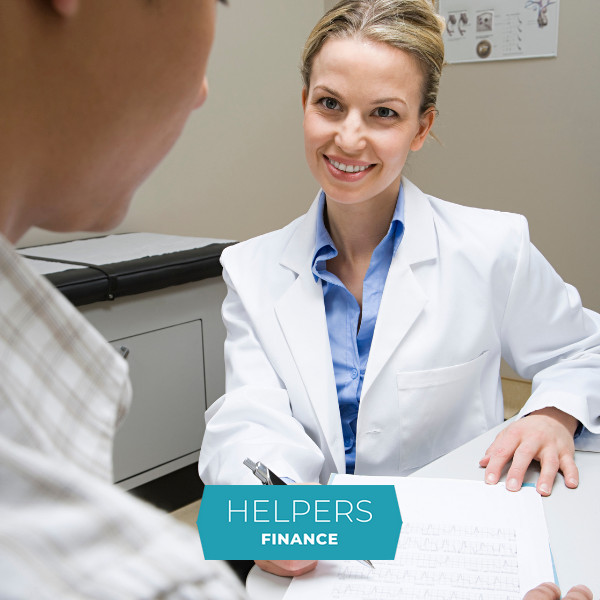
If the employee feels too ill to work throughout the day or there is a chance they could infect coworkers or customers if they came to work, they should see a doctor, and the doctor will decide. This doctor is usually the general practitioner (GP) or family doctor of the employee. If the doctor thinks the employee is unfit to work, they will create a doctor’s note to verify this. The doctor’s note is an official document, and the employee should submit it to their employer – more precisely, the payroll or HR specialist (usually when the employee is back to work).
Children’s sick leave
Parents of small children may need to stay at home with their children when they are sick. In this case, the same applies as if the parent were sick: it should be considered whether they will be able to work from home – this can be negotiated between you and your employee. If they cannot work from home, they will need a note from the child’s doctor to this effect (the same doctor can write a special note for the parent).
Parental sick leave is available for children under 12, as it is expected that older children can take care of themselves while they are sick at home. The younger the child, the more sick days are available to the parent.
| Age of the child | Parents living together | Single parents |
| Below 1 year and nursing | No limit for the mother if the child is in hospital | No limit for the mother if the child is in hospital |
| 1-3 years old | 84 calendar days / year | 168 calendar days / year |
| 3-6 years old | 42 calendar days / year | 84 calendar days / year |
| 6-12 years old | 14 calendar days / year | 28 calendar days / year |
Parental sick leave allowance is always paid by the Treasury (and not the employer), at a rate similar to regular sick leave:
- at 60% if the child is treated at home AND if the parent has been insured for more than 730 days
- at 50% if the child is treated at a hospital AND/OR if the parent has been insured for less than 730 days
Prepare for sick leaves at your Hungarian company
Employees can go on sick leave without any notice. This will affect both your business operation and payroll administration. Sick leave should be supported by a doctor’s notice that verifies eligibility, and documented in the payroll report of the business. Salaries should be calculated with the number and nature of sick days in mind, while information should be forwarded to the authorities so the employee can receive allowance from the Treasury too. At the same time, you should prepare your business for eventual sick days by having enough employees to cover every task, and by creating appropriate workflows for smooth substitution of sick colleagues.
Helpers Finance offers payroll administration as well as accounting services. Naturally, this includes the administration of sick days and the calculation of sick leave allowance, as well as administration for other types of paid and unpaid leaves. If you want to be supported by a team specialized in working with foreign business owners, do not hesitate to contact us.
Contact
Get in touch today

Monday - Friday
9am - 5pm CET
Helpers Finance Kft.
Budapart Gate
Dombóvári út 27
Budapest 1117, Hungary
If you’re visiting us, please use entrance A and come to the 2nd floor.