What is the difference between sales tax and VAT?
What you know as sales tax in the U.S. is more or less the same as VAT or Value Added Tax in Europe. Both are consumption-based taxes that are collected indirectly, meaning that while it is the end user who ultimately pays them, they are integrated into prices and collected by the seller. However, while sales tax should be collected only from the end user, VAT is collected at every point of sale – while remaining economically neutral for businesses.
What you know as sales tax in the U.S. is more or less the same as VAT or Value Added Tax in Europe. Both are consumption-based taxes that are collected indirectly, meaning that while it is the end user who ultimately pays them, they are integrated into prices and collected by the seller. However, while sales tax should be collected only from the end user, VAT is collected at every point of sale – while remaining economically neutral for businesses.
| Please note: this article does not intend to be exhaustive. Instead, you will find the following: – A basic comparison of sales tax and VAT – The main determining factors of both (type of product and relevant locations) – Collection and deduction – How the tax is communicated to customers – A simplified comparison table |
To get the full picture, make sure to consult an accountant.
Sales tax and VAT in a nutshell
Sales tax and VAT or Value Added Tax are both consumption-based taxes, meaning that they are intended to be levied on goods and services people buy. They are both indirect taxes, so they are collected by the sellers instead of the buyers, and the sellers are who forward these taxes to the relevant tax authorities; both taxes are incorporated into the prices customers pay. Rates will depend on the exact product and on the location where this product is sold – meaning either the place where it originates from or where it is delivered to a customer.
The main difference between sales tax and VAT is in the point of collection. Sales tax is collected and remitted only at the final point of sale. Throughout the supply chain, manufacturers and sellers need to prove that their customers are not the final customers, so the sales tax should not apply to them. If an intermediary cannot obtain such an exemption, sales taxes may accumulate. At the same time, VAT is collected and remitted at every stop of the supply chain, but sellers can set the VAT content of what they sell against the VAT they pay at purchase; as a result, VAT does not really affect B2B transactions, only B2C transactions. For that purpose, each seller should be registered under VAT (in some cases even if they happen to be VAT exempt).
Sales tax and VAT around the world
A country collecting taxes on consumption will usually either apply sales tax or VAT. While the U.S. applies sales tax, most of the EU applies VAT. (There is a third kind of consumption-based tax referred to as “Goods and Services Tax” or GST, but this “third” type shows wide differences from VAT, sales tax, and each other. Spain, Greece, Canada, India, Malaysia, and Singapore apply such systems.)
Sales tax in the U.S. is not determined on the federal level but at the state level. Additionally, counties or other smaller territorial units (cities, districts, or even smaller zones) may set their own VAT rates, which can even be stacked on each other. For example, in Chicago, IL, sales tax is 9.75%, made up of three rates: 7.25% state rate + 1% county rate + 1.5% city rate. It is estimated that in total, there are over 11,000 tax jurisdictions in the U.S.
VAT in the EU is determined at the national level, so each member state can have their own regulations regarding how much VAT is levied on certain types of products. Standard VAT is between 16-27%, but there are certain product types that enjoy reduced rates or even exemptions.
Main determining factors
Sales tax and VAT are both determined based on product type. In the U.S. sales tax system, the main distinction is between Tangible Personal Property (TPP) and services. Similar to this, the EU applies the concepts of goods and services. However, the category of TPP is often wider than that of goods and varies by state – mostly because sales tax is not typically levied on services, so some states decided to be make TPP more inclusive in order to increase state revenues. For example, a downloadable song will be considered an electronically supplied service in the EU, while it might be considered TPP in certain U.S. states due to how it may be “perceived by the senses”.
Another important factor for determining sales tax and VAT are the relevant locations – which become especially important in cross-state and cross-country sales. The U.S. sales tax is either origin based or destination based, meaning the location of the seller and the buyer; the destination-based approach is more common. Similarly, VAT in the EU is determined based on place of sale and place of delivery – whether one or the other will be applied will depend on the product type.
In both cases, for a business selling across borders, it is essential that they are aware of the different sales tax or VAT laws and apply them appropriately.
Collecting and deducting sales tax and VAT
Both sales tax and VAT are indirect taxes, meaning that they are part of the prices customers pay. Since the sales tax is supposed to be levied only on retail customers, it is sometimes also called a retail sales tax.
In the U.S., sellers are supposed add sales tax to their prices unless they can verify that they are not retail sellers. Such certificates are sometimes difficult to obtain, and there is no tax credit mechanism that would allow businesses to reclaim the sales tax they pay. As a result, some studies estimate that up to 40% of the total sales tax revenue in the U.S. comes from taxes levied on B2B transactions.
In Europe, VAT is collected at every point of sale, but taxpayers can reclaim VAT based on their purchases. As a result, it will be the final customer at the end of the supply chain who will pay VAT, while VAT will remain economically neutral for every business that comes before. (Zero VAT invoices are created under specific conditions, but they usually involve reverse taxation, meaning that the buyer is supposed to pay VAT themselves.)
This above probably explains why European price tags typically list only the full price of products while net prices are only indicated if a seller expects B2B sales (although receipts and invoices list every tax involved, including the VAT content of prices). In contrast, U.S. price tags typically include only the net price of items, and customers will be told the full price only upon checkout – so they are supposed to make calculations in their head if they want to know the full price ahead of time.
Sales tax in the U.S. and VAT in the EU
| Sales tax (U.S.) | VAT (EU) | |
| Basis | Consumption | Consumption |
| Collection type | Indirect | Indirect |
| Point of collection | Single-stage: only at the customer (single-stage) | At every stage of the process of distribution |
| Financial effect on B2B sales | None (because it should not apply) | None (because it can be deducted) |
| Level of regulation | State / county / city / district / zone | Member states |
| Rates | 0-16% | 0%-27% |
| Product types | Tangible Personal Property (TPP) and sometimes services | Both goods and services |
| Location | Destination based or origin based | Place of sale or place of delivery |
| Price tags | Only net price indicated, full price calculated at checkout | Full price indicated, net prices listed only at B2B stores |
VAT at your Hungarian business
Most Hungarian companies are subject to VAT. This means that your Hungarian business will charge VAT, but you will also be able to deduct VAT from your purchases. For that purpose, you will need to keep track of the VAT content of each incoming and outgoing invoice. Luckily enough, modern accounting tools will do that automatically, you just need to make sure to give your accountant access to your invoices on time so they can create and submit the monthly, quarterly, and yearly reports on behalf of your company, and calculate the VAT payable.
Helpers Finance provides accounting services to small and medium-sized businesses in Hungary, focusing on working with foreign owners. Naturally, our services include the calculation and reporting of VAT, as well as bookkeeping, payroll administration and HR compliance.
To learn more about VAT, read our other articles on the topic, or consult an accountant.
FREQUENTLY ASKED QUESTIONS
Yes, there is. Or rather, there is VAT or value added tax which is a consumption-based tax very similar to sales tax.
Your Hungarian business will have to pay VAT when you buy a product for it. However, the VAT content of every purchase and every sale is tracked separately, and they can be used to cancel each other out. Learn more here.
When EU companies that operate in different EU member states do business, they might issue zero VAT invoices. However, this does not mean that you do not have to pay VAT at all. If you receive a zero VAT invoice, it means that VAT is supposed to be paid in your country, and to reduce cross-border administration, you are supposed to pay VAT in your country yourself. This is called reverse taxation. Of course, you can still deduct this VAT from your VAT payable, so you might well end up not needing to pay it.
Alternatively, you can get a zero VAT invoice if your seller is not subject to VAT, but that option is available only to very small businesses, typically freelancers.
Sales tax is supposed to be simpler as it should to be applied only at the last point of the supply chain. This way, however, sellers have to prove that they are not selling to final customers, which may be problematic, so taxes may accumulate. VAT is collected at every point of sale, so it involves a lot more administration with strict rules. However, VAT can also be deducted, so the tax will eventually fall only on the end user without snowballing, as intended.



Contact
Get in touch today

Monday - Friday
9am - 5pm CET
Helpers Finance Kft.
Budapart Gate
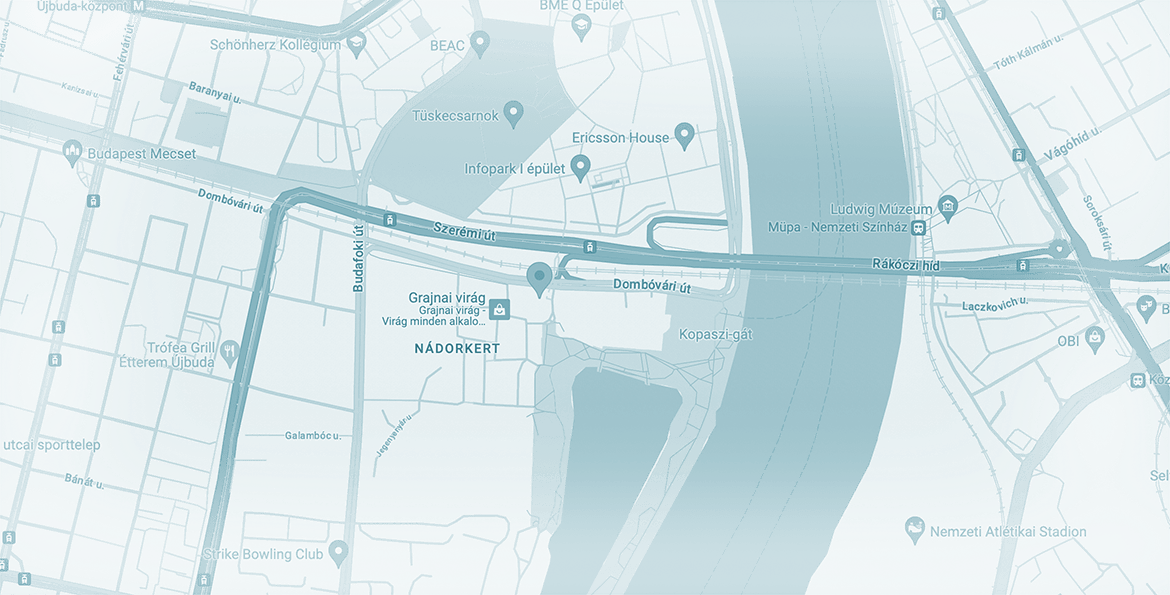
Dombóvári út 27
Budapest 1117, Hungary
If you’re visiting us, please use entrance A and come to the 2nd floor.